
Collision Repair
Quick Facts
- Program: Automotive
- Pathway: Business & Industry
- Campus: South
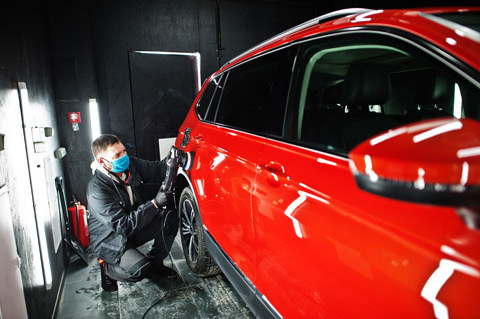
Automotive body repairers inspect, assess, and repair damaged cars and light trucks.
Request Info About TCC
Fill out the form to receive more information about Tarrant County College.
Sending…
Explore on This Page
Our Program
Why Choose Automotive Collision Repair?
- Prepare to be an entry-level automobile collision repair technician in a dealership or body shop
- Learn to use a variety of tools to remove damaged parts, hammer out dents & refinish surfaces
- Enjoy transforming a damaged vehicle into a vehicle that looks & drives like new
Prepare for What You Will Do at Work
- Repair & service collision-damaged mechanical or electrical systems
- Repair & restore damaged metal
- Repair body structures
- Refinish damaged surfaces
Marketable Skills You Will Learn
- Critical thinking
- Reasoning
- Communication
- Personal and social responsibility
- Teamwork
- Computer literacy
Before You Enroll, Think About:
- You are required to furnish your own hand tools to use in automotive services laboratory classes.
- You must enjoy learning because you will need to keep up with new materials and technologies.
- On the job, you may need to work in a variety of climactic conditions—depending on your workplace.
Need a boost to get ready for college?
Talk to your advisor about Developmental Studies if your TSI scores say you need some help in math or reading and writing.
Degrees & Certificates
Explore the TCC Catalog and view the list of courses you will need to take for your degree or certificate.
Degrees
Certificates
Level 1
How Much Time & Money to Finish?
2026–2027 Academic Year
| Degree or Certificate | Program Title | Semester Credit Hours | Total Tuition & Fees |
|---|---|---|---|
| AAS | Automotive Collision Repair | 60 | $4,440 |
| CRT1 | Automotive Metal Repair | 21 | $1,554 |
| CRT1 | Automotive Refinishing | 21 | $1,554 |
Notes:
- Tuition is based on in-state, in-county rates.
- Totals do not include textbooks and other materials.
Continuing Education Programs
Time commitments and fees vary depending on the course.
Earn More Choices & More Money
Transfer to a college or university to continue your studies. Earning a bachelor’s degree opens the door to career and promotion opportunities.
Next steps
- Talk to your advisor about planning for transfer
- Explore transfer schools
Start on Your Pathway!
Contact
Updated March 09, 2026