
Heating, Air Conditioning and Refrigeration Technology (HVAC/R)
Quick Facts
- Pathway: Business & Industry
- Campus: South
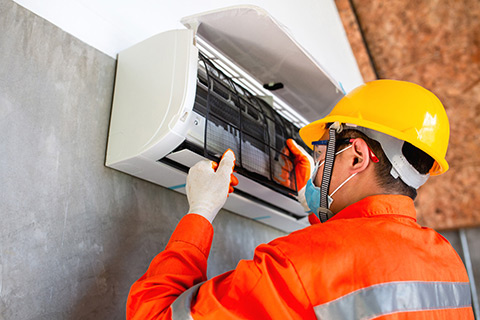
Heating, ventilation, air conditioning, and refrigeration (HVAC/R) technicians to install, service and repair, the air conditioning, heating, and refrigeration units in our homes and workplaces.
Request Info About TCC
Fill out the form to receive more information about Tarrant County College.
Explore on This Page
Program Description
Why Choose HVAC/R?
- Enjoy trouble-shooting & problem-solving
- Specialize in an interest area within HVAC/R, such as solar panels, commercial refrigeration, residential systems, or resting and balancing
- Enter an in-demand field with a bright job outlook
Prepare for What You Will Do at Work
- Install, check & maintain HVAC/R systems
- Work with other specialized workers to install large HVAC/R systems
- Repair or replace malfunctioning components of HVAC/R systems
- Follow government regulations when handling & managing refrigerants
Marketable Skills You Will Learn
- Critical thinking
- Reasoning
- Communication
- Personal and social responsibility
- Teamwork
- Computer literacy
Before You Enroll, Think About:
Special Requirement: Hand Tools
When you enroll in one of our HVAC/R Programs, you are required to furnish your own hand tools to use while you are in the program and in the field.
These tools are not required on the first day of class, which is set aside for orientation.
On the Job
- You may work outside and potentially in bad weather.
- You may have to work in cramped, awkward, uncomfortable spaces.
- HVAC/R technicians sometimes work overtime or irregular hours during weather extremes.
Need a boost to get ready for college?
Talk to your advisor about Developmental Studies if your TSI scores say you need some help in math or reading and writing.
Degrees & Certificates
Explore the TCC Catalog and view the list of courses you will need to take for your degree or certificate.
Degree
Certificates
Level 2
Occupational Skills Awards
Degree
Certificates
Level 1
Continuing Education Programs
How Much Time & Money to Finish?
2026–2027 Academic Year
| Degree or Certificate | Program Title | Semester Credit Hours | Total Tuition & Fees |
|---|---|---|---|
| AAS | Heating, Air Conditioning and Refrigeration Technology: Commercial HVAC/R Technician | 60 | $4,440 |
| CRT2 | HVAC/R Commercial Technician | 51 | $3,774 |
| OSA | HVAC Installer | 11 | $814 |
| AAS | Heating, Air Conditioning and Refrigeration Technology: Residential HVAC/R Technician | 60 | $4,440 |
| CRT1 | HVAC Residential Technician I | 23 | $1,702 |
| CRT1 | HVAC Residential Technician II | 20 | $1,480 |
Notes:
- Tuition is based on in-state, in-county rates.
- Totals do not include textbooks and other materials.
Continuing Education Programs
Time commitments and fees vary depending on the course.
Plan Your Transfer
Transfer to a college or university to continue your studies. Earning a bachelor’s degree opens the door to career and promotion opportunities.
Next steps
- Talk to your advisor about planning for transfer
- Explore transfer schools
Start on Your Pathway!
Contact
Career Advising
Get help with academic planning.
Updated October 16, 2026