
Criminal Justice
Quick Facts
- Pathway: Human & Public Service
- Campus:
Criminal justice professionals protect lives and communities.
Request Info About TCC
Fill out the form to receive more information about Tarrant County College.
Explore on This Page
Our Program
Why Choose Criminal Justice?
- Serve your community through the diverse, exciting, and rewarding career options law enforcement offers
- Earn the 2-year degree more state and local law enforcement agencies now require
- Be able to continue your studies by transferring your associate degree credits to a 4-year institution
- Choose from a diverse selection of careers
Prepare for What You Will Do at Work
- Police officers maintain order and keep their communities safe by enforcing the law and patrolling the communities. They also search for or arrest criminals.
- Correctional officers supervise those who have been arrested and are awaiting trial. They also transport prisoners between the courtroom and other secure facilities.
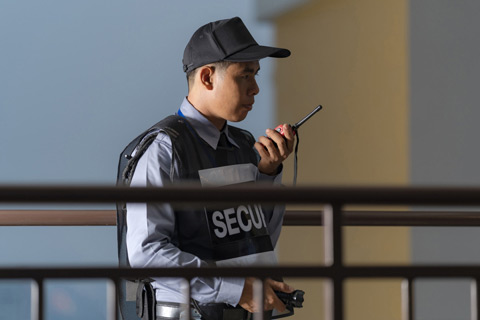
- Security guards patrol and monitor premises to prevent crime and infractions of rules. They may also operate metal detectors or other similar equipment.
Marketable Skills You Will Learn
- Critical thinking
- Reasoning
- Communication
- Personal and social responsibility
- Teamwork
- Computer literacy
Before You Enroll, Think About:
- Our Criminal Justice A.A.S. does not result in Texas Commission on Law Enforcement (TCOLE) certification.
- Some careers in criminal justice will require education in addition to a 2-year A.A.S.
- Law enforcement is a physically and mentally demanding occupation.
- Law enforcement requires excellent oral and written communication skills.
- 3 skills or work style traits that will help you succeed in this field:
- Stress tolerance
- Perceptiveness
- Integrity
About Basic Peace Officer Certification
Licensing Notice: Texas House Bill 1508
This program prepares you for an occupational license. However, you may not be eligible for licensing if you have a prior criminal history.
For more details, see Texas House Bill 1508 Licensing Requirements
Need a boost to get ready for college?
Talk to your advisor about Developmental Studies if your TSI scores say you need some help in math or reading and writing.
Degrees & Certificates
Explore the TCC Catalog and view the list of courses you will need to take for your degree or certificate.
Degree
Certificate
Level 1
Occupational Skills Award
Credits for Transfer
These courses provide transferable credit only and do not lead to a degree or certificate.
Northeast, Northwest, Trinity River & TCC Connect Campuses
Continuing Education Programs
How Much Time & Money to Finish?
2026–2027 Academic Year
| Degree or Certificate | Program Title | Semester Credit Hours | Total Tuition & Fees |
|---|---|---|---|
| AAS | Criminal Justice | 60 | $4,440 |
| CRT1 | Basic Peace Officer Certification | 24 | $1,776 |
| CRT1 | Criminal Justice and Policing | 24 | $1,776 |
| OSA | Security Management | 9 | $666 |
| FOS | Criminal Justice | 21 | $1,554 |
Notes:
- Tuition is based on in-state, in-county rates.
- Totals do not include textbooks and other materials.
Continuing Education Programs
Time commitments and fees vary depending on the course.
Earn More Choices & More Money
Transfer to a college or university to continue your studies. Earning a bachelor’s degree opens the door to promotion opportunities.
For example, you will be ready to work toward:
- Bachelor of Arts in Criminal Justice
- Bachelor of Arts in Victim Studies
- Bachelor of Science in Homeland Security Studies
Next steps
- Talk to your advisor about planning for transfer
- Explore transfer schools
Start on Your Pathway!
Contact
TCC Northwest
Jason Clark-Miller
Program Coordinator
Call 817-515-7570
TCC Northwest
Donna Herndon
Administrative Assistant
Call 817-515-7660
Email donna.herndon@tccd.edu
Please call or email me to make an appointment.
Career Advising
Get help with academic planning.
Updated September 29, 2026